


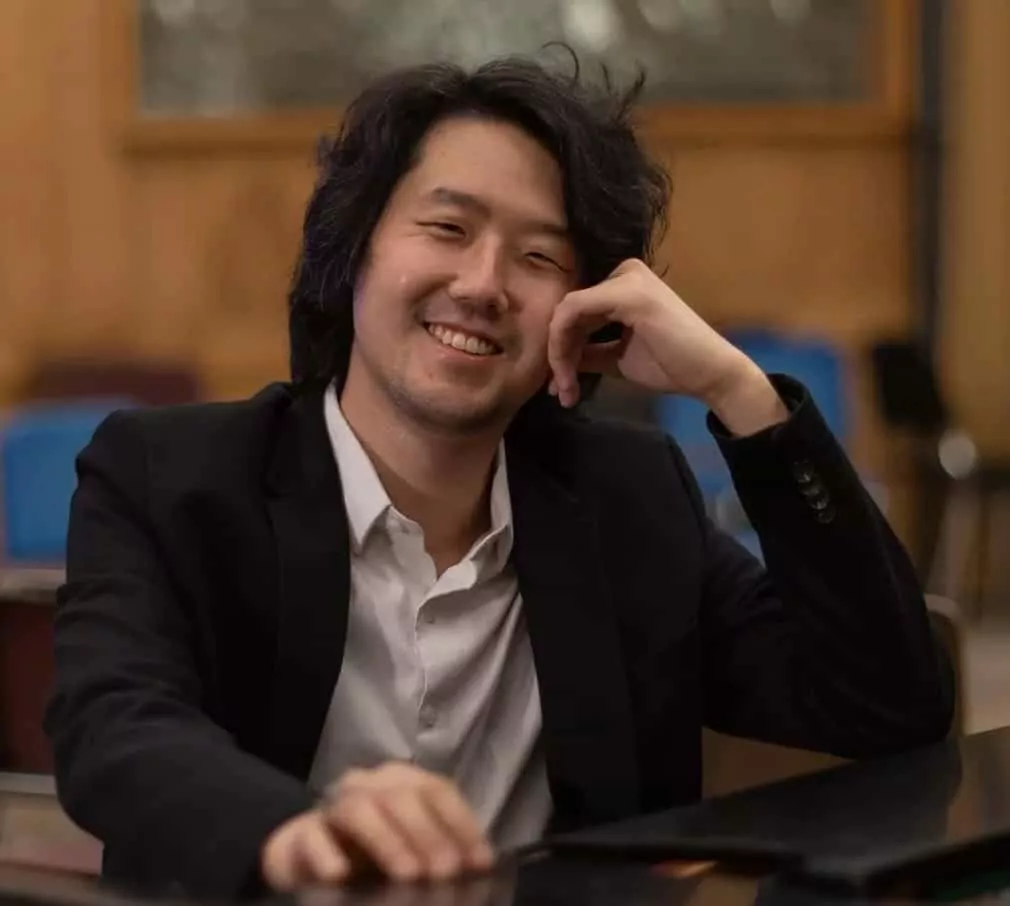


Piano lessons typically cost between $40-$90 per hour* in Brownsburg, Indiana, but costs can vary widely depending on the teacher’s education and performing level, the location, lesson length and whether they are in-person or online.
The average price for a one-hour piano lesson in Brownsburg is $80. Live online piano lessons using Zoom or Skype charge between $20-40 for a half hour lesson. Local private one-on-one piano lessons range from $35-50 for a half hour lesson, while in-person group lessons can cost $25 for a half hour lesson.
Piano teachers without a music degree will charge as little as $35 per hour, and professionally performing concert pianists with with prizes from top piano competitions might charge as much as $300 per hour!
60+
Instructors
25,000+
Lessons taught
4.9/5 ⭐⭐⭐⭐⭐
Average lesson rating
Athena So
Piano
B.M. York University
Kristi Hifzi
Piano
M.M. Conservatorio Giuseppe Tartini
Ryo Kaneko
Piano
D.M.A. Indiana University
Julia Roer
Piano
B.A. Maranatha Baptist University
Larisa S.
Piano
D.M.A. University of Miami
Absolutely! It’s best for beginners to play piano the correct way from the start with the help of a professional teacher. An experienced piano teacher can guide students smoothly from primary to advanced levels, helping them avoid developing bad habits such as poor posture, incorrect fingering, and lack of hand and wrist control. It’s important for beginners to prioritize learning the correct piano techniques from the beginning to set up a solid foundation for future advancement.
Get a Free Trial Lesson in Brownsburg!
Meet professional piano instructors and begin a 1:1 lesson. The first lesson is on us.
Online piano lessons are generally the most affordable way to take piano lessons in Brownsburg, with an average increase of about $15 for in-person lessons at a teacher’s studio, and a small additional increase to have the teacher visit your home.
In-person prices can vary widely though depending on the number of qualified teachers in your area. If you’re trying to find qualified piano teachers at reasonable prices, online lessons will be your best bet.
Fingering is a basic technical element in piano playing that helps pianists navigate smoothly between notes. Great fingering is a skill that lets you play notes fast, clean or evenly.
Professional piano teachers are trained to identify the best fingering and give live feedback to students, helping them to not only improve their fingering but also learn how to find optimal fingering and practice strategies on their own.
Piano students learn a variety of practice techniques and strategies to help improve their playing and expand their repertoire. For beginners, this includes basic technical exercises to strengthen their fingers and proper music reading. Advanced learners may focus on refining their tone and adding musical expression.
Piano students also learn how to set and achieve practice goals on a daily and monthly, and how to keep themselves engaged and inspired by using various practice methods.
We surveyed over 100 piano teachers across our own site, Lesson With You, and two other major sites, Takelessons.com and Thumbtack.com. We specifically looked for teachers who have a degree in piano and teach lessons online.
Lesson With You has a set price of $65 per hour. Each piano teacher at Lesson With You has either a Master’s or Doctorate in piano, but the lessons are only $65 per hour, making the live online piano lessons an incredible value.
Thumbtack had the highest average price among qualified teachers in Brownsburg, at $85 per hour. Even finding a teacher who didn’t major in piano, such as one with a flute or violin degree, did not do much to lower the price. Sorting through the options, it quickly became apparent that many of the top teachers did not have formal education in music, and even those who had a music degree often did not have it for piano, despite charging high prices for music lessons.
Takelessons has a lower average price, at $68 per hour among the teachers we surveyed. But like Thumbtack, many of the piano teachers listed either did not have a music degree or did not major in piano. Takelessons and Thumbtack both have a very large number of teachers, so surely there are some good deals, but finding teachers who’s education and prices matched that of the teachers at Lesson With You is difficult and time consuming.
Lesson With You offers 1-on-1 live online piano lessons with professional piano instructors who exclusively teach piano and have at least Bachelor’s degrees from the top music schools including the Eastman school of Music, Indiana University, Guildhall Music School and Manhattan School of Music.
The first trial lesson is FREE! No Contracts Ever.
60+
Instructors
25,000+
Lessons taught
4.9/5 ⭐⭐⭐⭐⭐
Average lesson rating
See other areas we serve near Brownsburg
Marc Levesque is a graduate of the Jacobs School of Music at Indiana University where he studied Piano Performance and Arts Administration, receiving both Bachelor’s and Master’s degrees before attending Carnegie Mellon University to study educational technology. As a pianist, Marc made his debut with the Bloomington Symphony Orchestra at age 15, playing Beethoven’s Piano Concerto No. 2., and he has performed at various summer programs and festivals across the United States, Italy, and Croatia. Marc is a co-founder of Lesson With You, which fully combines his love of music, technology, and education.
Athena So began her musical journey at a young age as a classical pianist. Although she has extensive training through the Royal Conservatory of Music, Athena has always been fascinated in the art of storytelling through music. Through her experience as an accompanist and pit musician in various productions and cabarets throughout Toronto and the Greater Toronto Area, Athena immediately discovered a strong passion for musical theatre.
As a recent graduate of York University’s Bachelor of Fine Arts (Spec. Hon. Music) and Bachelor of Education programs, Athena has spent her post-secondary years exploring a career in music direction. Athena’s journey began as the rehearsal pianist and pit musician for Vanier College Productions, where she quickly became the first student music director at the theatre company, working on shows such as Next to Normal, Shrek the Musical, and My Favorite Year. Since then, Athena has workshopped new Canadians works such as Milo’s World, played at various cabarets around Toronto, both in-person and online, and music directed Youth Theatre companies including Bravo Academy and FLATO Markham Theatre.
Currently, Athena is a music director at The Second City, serving in both Second City TourCo (Understudy MD) and the Training Centre. Much of Athena’s influences revolve around contemporary musical theatre and classical music, but what truly drives her passion is collaborating with different art forms to collectively tell a story.
Kristi Hifzi is a professionally active concert pianist and a piano instructor located in Vienna, Austria.
Kristi obtained the certificate of excellence in her High School studies as well as maximum grade “cum Laude” in her Bachelor’s and Master’s degree for Piano Performance at Conservatorio di Musica “Giuseppe Tartini” Trieste in Italy, where she studied with Professor and Pianist Teresa Trevisan. Currently Kristi lives in Vienna, Austria where she studies in the University of Music of the city of Vienna and studies Piano Performance under the tutelage of Markus Prause – a former student of Walter Fleischmann. She also studies Chamber Music with Denise Benda – a former student of P. Badura – Skoda, R. Buchbinder and M. Perahia.
Kristi is a laureate of around 20 prizes in several National and International competitions and her concert activity from 2015 – 2021 reaches the number of around 60 different performance events. She played in various important stages such as: Teatro “La Fenice”- Sala Apollinee – Venezia, Italy, Auditorium RAI FVG – Italy , Royal Palace of Albania, Albanian Radio Television, “Pianodrom” Festival- Tirane, Albania, Sala Tartini of Conservatory “Giuseppe Tartini” Italy, Grand Hall of the University of Art – Tirana, Albania etc.
Her participation in the masterclasses include: Antoniette van Zabbner (Austria – U. S. A.), Claus – Christian Schuster (Austria), Borislava Taneva (Bulgaria), Mihajlo Zurkovic (Serbia), Madalena Soveral (France), Maria Grazia Bellocchio (Italy), Zuzana Niederdorfer (Austria), Pierluigi Camicia (Italy), Ida Gamulin (Croatia) etc.
Recently, Kristi was accepted in the “Malta Classical Music Academy” to take lessons from some of the greatest piano masters in the world: Pavel Gililov, Michel Beroff, Dmitri Alexeev. In December 2021 Kristi makes her third debut at the most prestigious Festival of Classical Music in Albania – ”Pianodrom”, and she will make her first professional debut in Vienna.
Winner of the 2014 Miami Music Festival Piano Competition and the 2015 Jacob Flier International Piano Competition, Japanese pianist Ryo Kaneko is a rising star in the next generation of pianists. He has performed with conductors such as Vladimir Feltsman, Michael Rossi, Victoria Gau, and Bohuslav Rattay and has presented recitals on many prestigious venues including the Kennedy Center, New World Theater, Rosa Hart Theater, McKenna Theater, Manhattan’s Steinway Hall, and the Studley Theatre.
Kaneko’s performance has been consistently praised for his unrivaled, visceral energy. Times Herald-Record’s Mr. James F. Cotter vividly describes Mr. Kaneko’s performance of Sergei Rachmaninoff’s first piano concerto: “The final allegro takes the form of a scherzo, which Kaneko brought to a rousing climax that brought the audience to its feet with shouts of ‘Bravo.’”
Ryo received his undergraduate and Master’s degree at Rice University, where he studied with the internationally acclaimed artist Dr. Robert Roux. Currently, he is earning his Doctor of Music in Indiana University under the guidance of Professor Emile Naoumoff.
Born in Chisinau, Moldova, Larisa Soboleva began her piano studies at the age of five with Larisa Kalinovskaya. In 1998, she continued to study at the Republican Lyceum “Ciprian Porumbescu” under the distinguished pedagogue and pianist Lia Oxinoit. In 2003, Mrs. Soboleva was accepted into the National Academy of Music, and Fine Arts in Chisinau, where she studied Dr. Inna Hatipova and Sergei Covalenco. In 2008, Mrs. Soboleva received a full scholarship and assistantship from Rowan University to study with Professor Veda Zuponcic. She was awarded the full scholarship and assistantship from the University of Miami in 2012, where she completed her doctorate studies under Santiago Rodriguez and Naoko Takao.
During her years of study, Ms. Soboleva has won prizes in National and International Competitions in Moldova, Ukraine, Romania, and the USA. She has performed with the National Orchestra of the Teleradio Moldova, with National Chamber Orchestra, and with the orchestra of Rowan University. Ms. Soboleva has recorded a number of compositions written by composers of Moldova in 2006 and 2013, including works by Vladimir Rotaru, Vladimir Beleaev, and Ghenadie Ciobanu.
She successfully combines performance activities with piano teaching. Her essay
on the pedagogical subject “Leaning Away from the Piano à la Gieseking” won the Clavier Companion Collegiate Writing Contest and has been published in the Clavier Companion, 2013. Larisa was one of the first Piano Faculty of the Rowan Prep (NJ) founded in 2009, a Piano Faculty at the Superior Academy of Music (FL), Frost School of Music Preparatory Program (FL), Music Authority (MI), School for the Arts (MI), and Art of Musique (MI).
Julia Roer grew up in a household surrounded by music and musicians, as both her parents are college music professors. Julia lived in the Philippines, where her parents taught, until she returned to the USA for college. She studied at Maranatha Baptist University, and graduated with her Bachelor of Arts in Piano Pedagogy in May of 2021. Julia participated in MBU’s collegiate chapter of MTNA and is a Nationally Certified Teacher of Music for Piano. During a college internship teaching piano, Julia discovered her love for working with students of all ages and backgrounds, and found joy in communicating her love for music with her students.
Along with teaching, Julia enjoys playing piano and cello at her church, hiking backcountry trails with her husband, and making music with her two sisters, who are also musicians!
Julia’s goal is to produce students who will become lifelong musicians with a deep appreciation and love for music. Her piano lessons aim to encourage students’ passion for making music and communicating with others.
Amy Sauve has studied music since the age of 5. Her educational journey is lifelong, but began with years of private Classical piano and viola lessons, several symphony orchestras, 4 summers at Interlochen Arts Camp, a summer at the Rimsky-Korsakov Conservatory in Russia, a Bachelor of Music degree from Michigan State University in Piano Performance and Piano Pedagogy, Music Teacher Certification for the State of Michigan, many workshops and conferences all over the country, and continues on by soaking up inspiration from her peers.
Ms. Sauve is an active performer. Although she is classically trained, much of her performance experience is in the pop, rock, and musical genres. Amy has performed at The White House twice, toured with Jazz legend Benny Carter, her band opened for Night Ranger and Survivor, she accompanied The Lion King tour workshop, performed with Opera diva Frederica von Stade, had an impromptu performance with Brandi, as well as performed Rhapsody in Blue with the U of M Orchestra. Amy is regularly hired to music direct main stage musicals and has MD’d more than 20 musicals. She is a contract pianist for Detroit-area events and productions, including Detroit Opera. She was ranked in the top 5 best Music Directors for Broadway World’s Regional Awards.
Amy Sauve has been a high school music teacher of voice, orchestra, theory, piano, and ensemble music for more than 15 years. Additionally, she has been the Music Director for Summer Stock theatre camp teaching first graders through high schoolers musical theatre songs from the beginning stages through performances. She is the music director for a large church with over 5000 parishioners where she cultivated a vibrant music program with over 50 musicians and bands at each service. She is a collaborative pianist and vocal coach at Oakland University.
Her ability to allow oneself to become fully immersed, body and spirit, into the music has encouraged hundreds, perhaps thousands of students over the years, elevating their mental state to discover the gift of music!
60+
Instructors
25,000+
4.9/5 ⭐⭐⭐⭐⭐
Average rating

Sign up for a free 30-minute live online music lessons with an expert instructor.
No contract or credit card necessary.
60+
Instructors
25,000+
Lessons taught
4.9/5 ⭐⭐⭐⭐⭐
Average lesson rating


